

“Bendigo Butternut” Bingo
Surprise gardening success, and an interview with one of Victoria’s foremost vegetable breeders
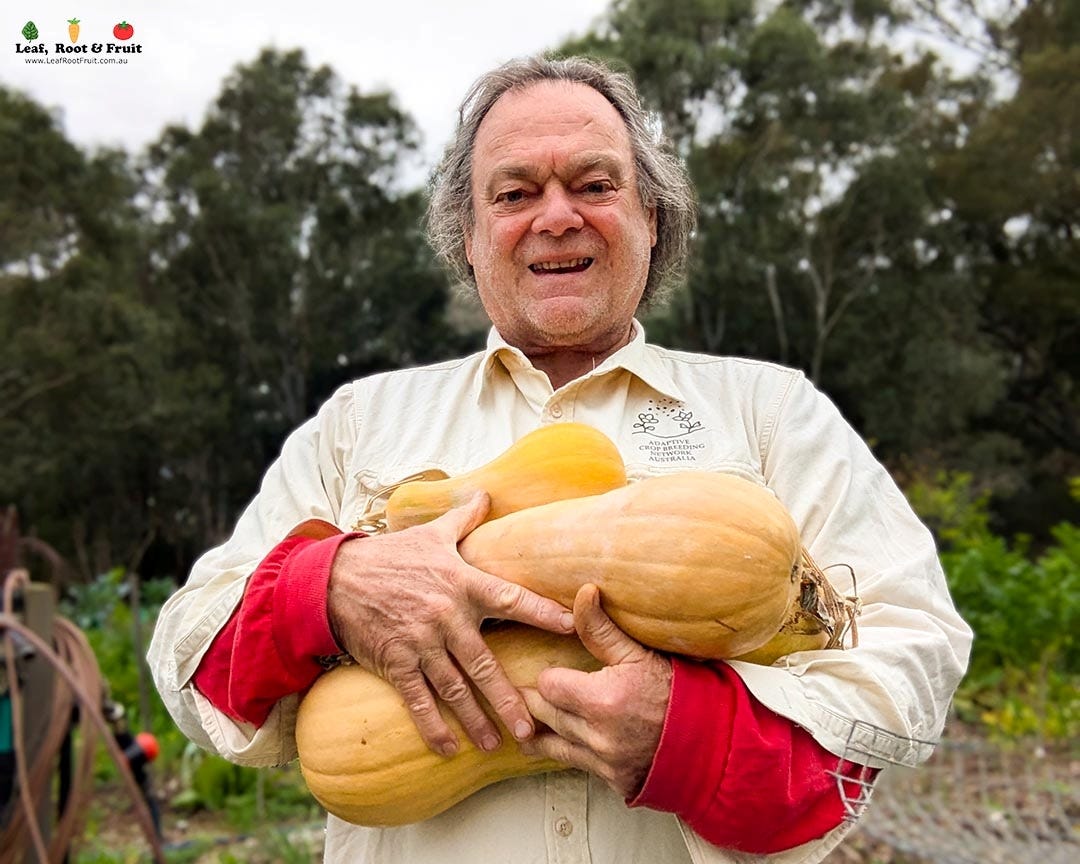
I love butternut pumpkins. A butternut fruit is compact. My family can get through a whole butternut in two or three sittings – less if a pot of pumpkin soup is involved. It’s a different story when our household tackles old mate “Jarrahdale”, or one of his heavyweight Cucurbita maxima mates: the outcome is typically rotten sludge in the bottom of the fridge before we get through the whole thing. Seven or eight kilos of pumpkin in one go is too much, but a tidy little two-kilo butternut is just right – a Goldilocks pumpkin.
And then there’s the flavour. It’s hard to beat an “Australian Butter” pumpkin (despite the name, it’s not a butternut), and “Jarrahdale” and “Queensland Blue” are two of my other favourites for taste. But my pick of the pumpkins for sweetness is a butternut.
I’ve tried and tried to grow butternuts here in Kyneton. In Melbourne, they were a staple for me. But in Kyneton, the vines have always produced only one or two small, unripe fruit before falling limp at the end of the short growing season. Meanwhile the C.maxima vines growing next to them produced an abundance of huge, tasty pumpkins. I’ve also grown tromboncinos, but they’re not the same, flavour-wise. I’d given up on butternuts and on every one of the C. moschata pumpkins (more on the who’s who of pumpkins here). They weren’t worth the space and water.
But then I was made an offer I couldn’t refuse.
Free seeds.
Enter “Bendigo Butternut”
Last year I was given some seeds from Gregg Muller’s landrace butternut line. Gregg is based in Strathfieldsaye, near Bendigo, and has decades of experience breeding his own vegetable varieties and sharing them with the gardening community. He runs his own seed business, Useful Seeds, and has 44 tomato varieties available for purchase, along with colourful snow peas, rainbow carrots and more.
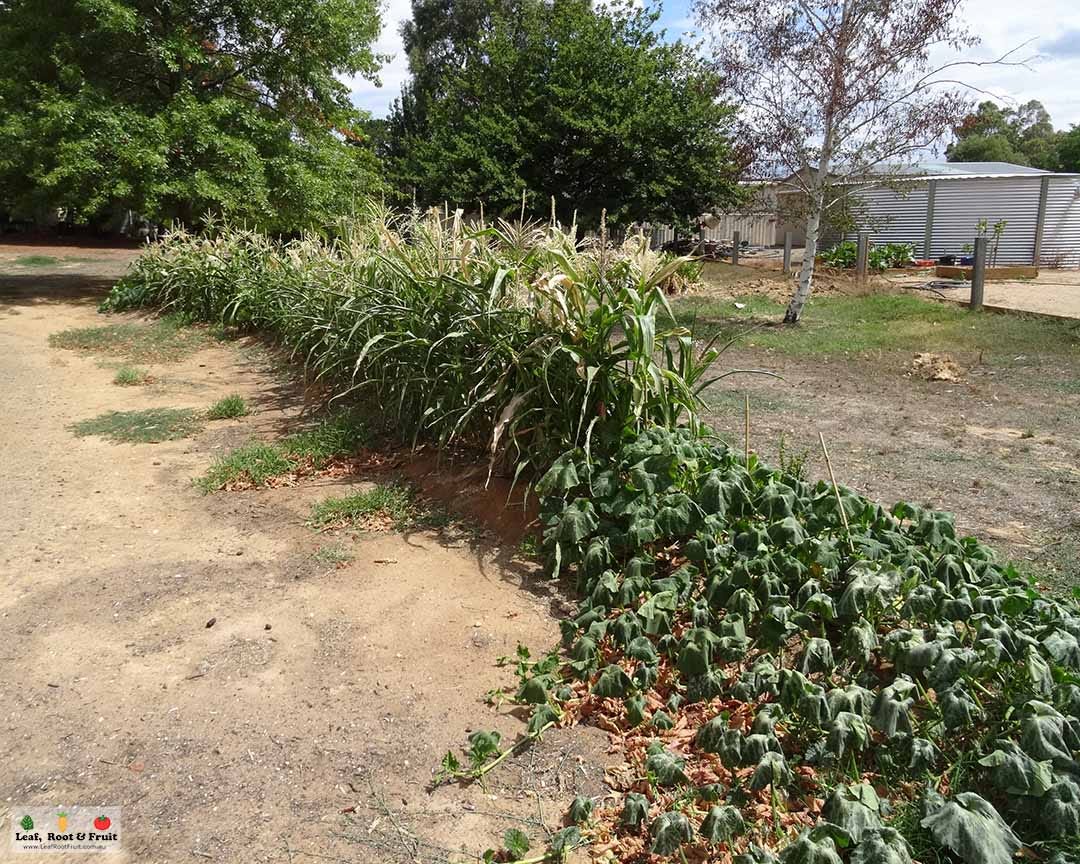
Gregg’s “Bendigo Butternut” landrace is an intentionally cross-bred mix of varieties with a diversity of genetics. Gregg has spent several years developing this line, harvesting from the best-performing pumpkins each year and saved seeds from the tastiest. Kyneton’s climate is similar to Bendigo’s, and I was intrigued to see how Gregg’s landrace would perform in our short growing season. In early December 2025, I popped a few seeds directly into the ground where some of my C. maxima seeds had failed to germinate in the slow-to-warm spring soil.
Boom boom watch them zoom
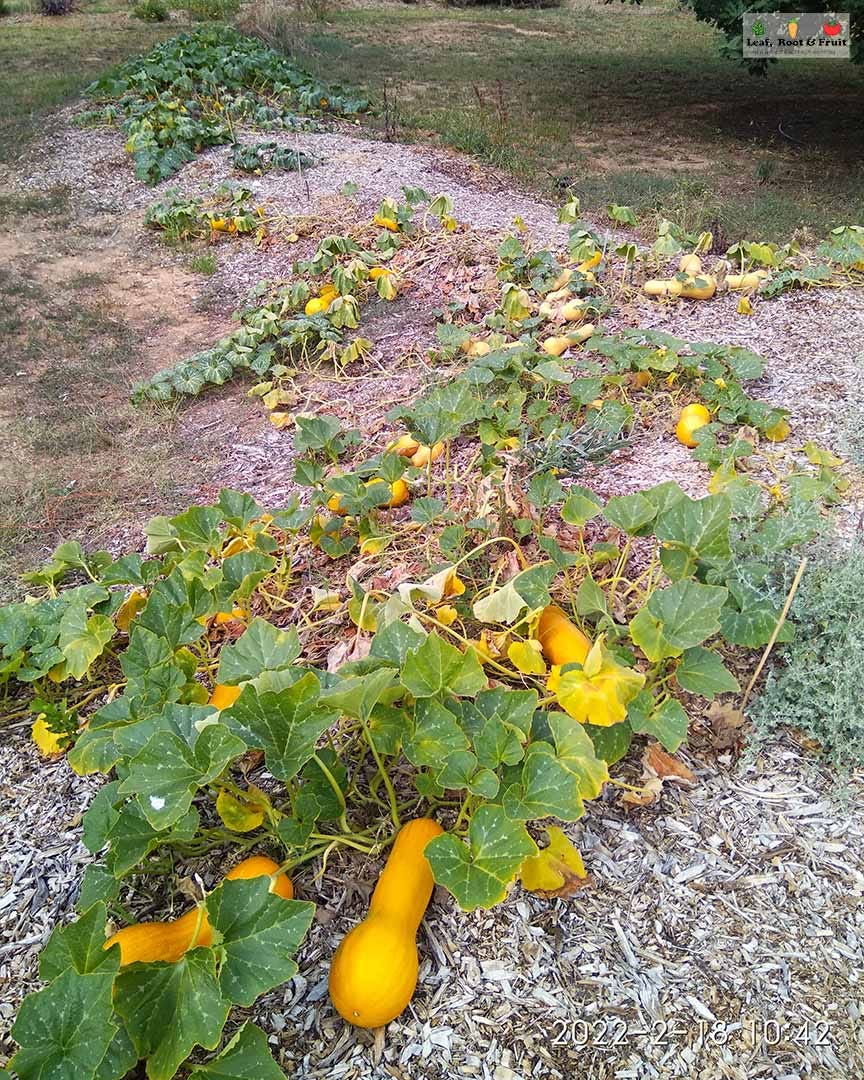
The “Bendigo Butternut” seeds were quick to germinate. Some of the vines were rampant and managed to catch up to the C. maxima vines that had been sown three weeks earlier. As the vines grew, the high level of genetic diversity in the mix became apparent. While some vines rampaged, others dawdled along – horticultural hares and tortoises.
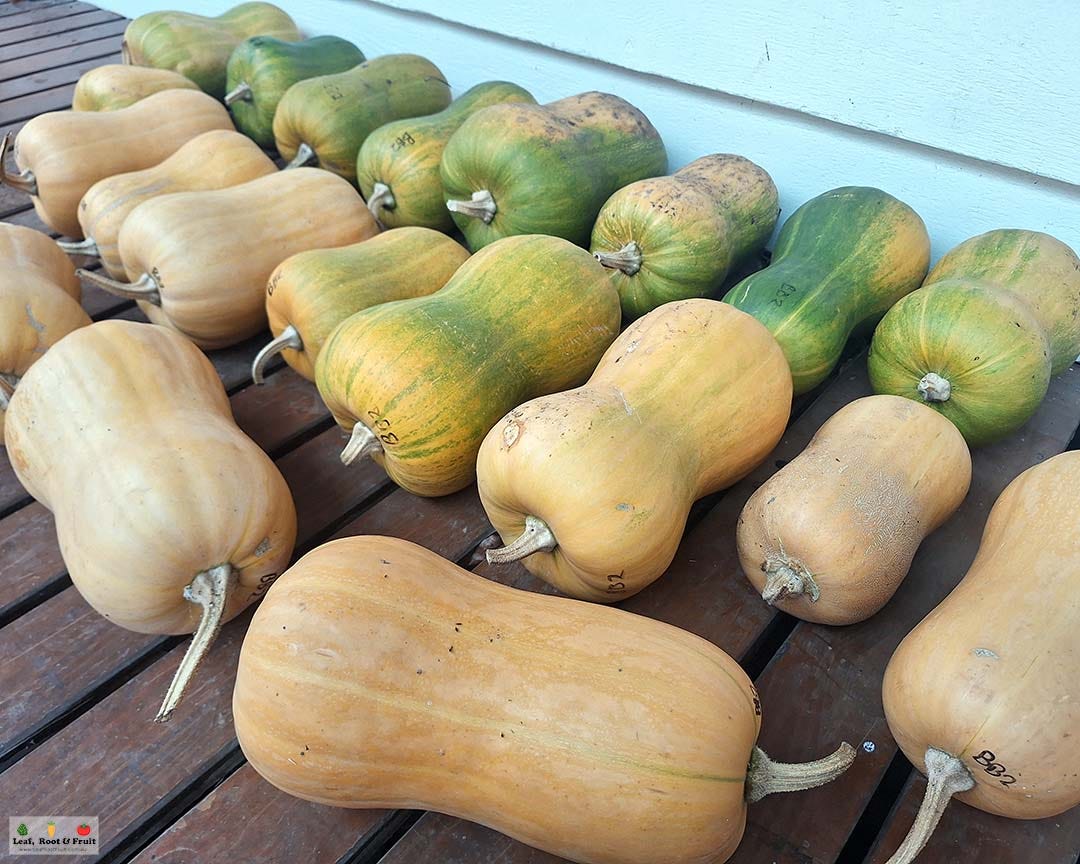
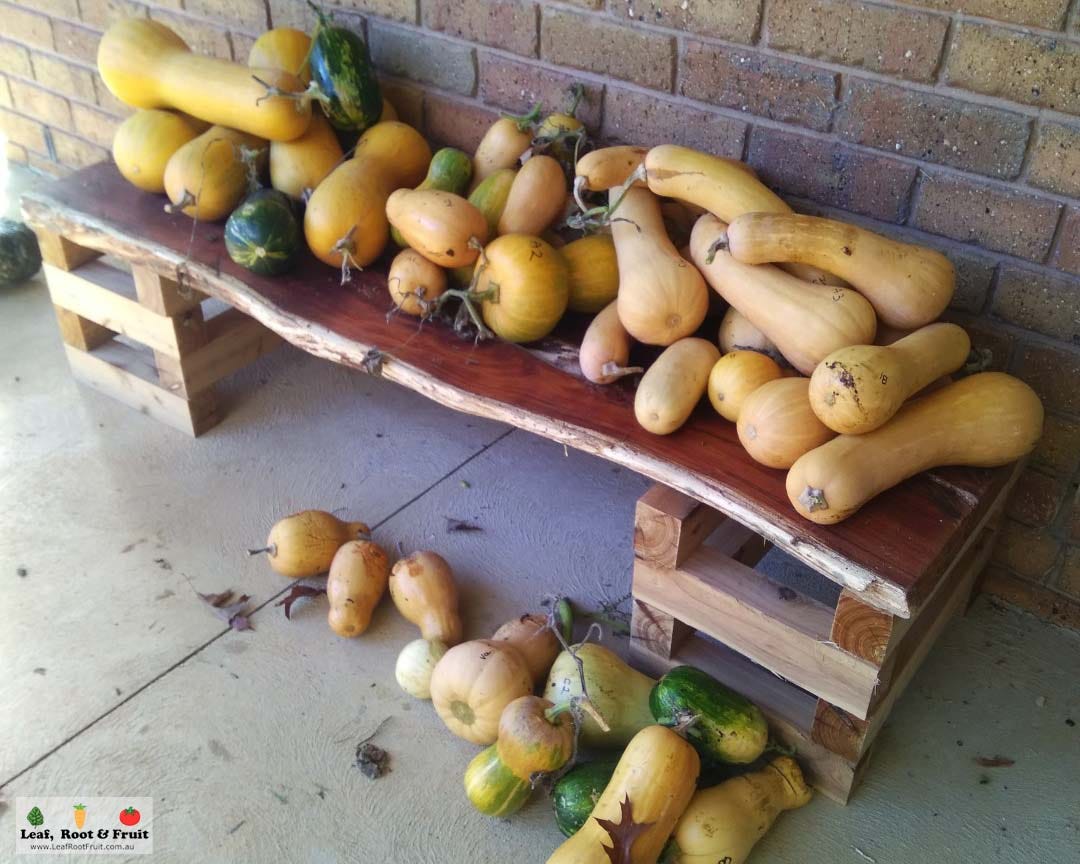
A couple of vines flowered early and started setting pumpkins way before I’d normally expect. As the fruit developed, the diversity in phenotypes continued to show. Some fruits were oblong shaped and dark green, others stripy and long and thin. I was nervous that I might be growing some rejects, but Gregg assured me they would all taste great.


This first crop of fruit ripened in mid-March. From just one plant, I picked eight pumpkins, totalling 22 kilograms from that first flush. Then the February and March rains kicked off a second flush of growth and another crop of pumpkins. Many of these ended up frost damaged in our first frost in mid-April. But the plants recovered somewhat and many of the pumpkins ripened up enough to warrant harvesting. That same impressive plant produced another 14 pumpkins. The total haul from one vine was 54 kilos!
By comparison, crops from the other vines were paltry. One plant produced only a miserly two fruit, totalling just 3 kilograms.
The ultimate test, though, is flavour, and my expectations were high.
The first pumpkin was tasty, but not as sweet as I’d hoped. Perhaps my expectations were unrealistic? Perhaps it wasn’t fully ripe? I’ve since tried a few other fruit from different vines and they are also tasty, but not amazing. I don’t see this mild flavour as a complete failure. The 2025–26 summer growing season was a disaster. My tomatoes, greengages and apricots were all insipid. Even the maxima pumpkins weren’t as tasty as I remembered them to be. The blandness was so widespread across my garden that I thought my taste buds must be on the blink. But many of my readers have confirmed that it wasn’t just me: their produce was also less tasty than in previous summers. I’ll keep tasting and saving seed. Hopefully, next summer the conditions will be better, and I’ll get a more representative sample of the “Bendigo Butternut’s” taste potential. I’ll also have to update my How to Grow Pumpkins guide.
I’m breeding Kyneton’s own “Trombo-nuts”
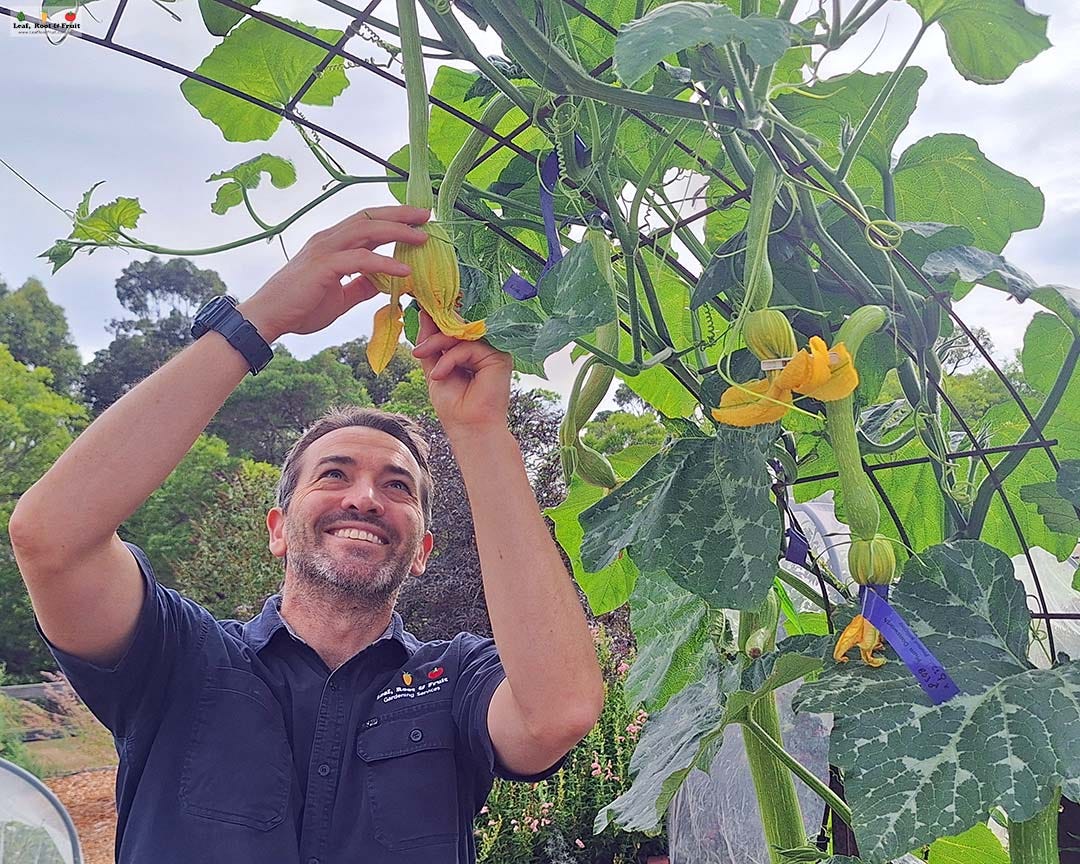
As I crack into each “Bendigo Butternut“ pumpkin, I’m saving the seeds, and I’ll plant even more vines next year. This summer I also trialled crossing “Bendigo Butternut” with tromboncinos to further diversify the genetics. Tromboncinos are one of the most rampant and productive cucurbits that I know of. They also appear to have some of the best resistance to powdery mildew, and they store well. But I find their flavour insipid. If I’m lucky, I’ll develop a strain of mildew resistant, rampant vines that produce an abundance of tasty pumpkins.
I’m also keen to extend Gregg’s hard work and generosity. He has encouraged me to share seed that I’ve saved from my pumpkins in a future Seeds of Gratitude campaign.
”Breeding vegetables is not hard”: Gregg Muller on weaklings, creampuffs and tough love
Gregg Muller’s “Bendigo Butternut” is a testament to the power of saving your own seed and embracing “surprise gardening”. When I told him I was keen to glean some tips on how to go about developing my own vegetable varieties, he kindly answered my questions and shared his tips on how he developed “Bendigo Butternut”.

Gregg, how did you develop your “Bendigo Butternut” strain?
In spring 2019 I moved to a property with enough room and water to finally grow pumpkins. I transplanted every butternut variety I could find into a huge composted and irrigated garden bed, which produced masses of large, insipid pumpkins that I fed to a friend’s chooks.
As an afterthought, I had direct-sowed four compact-vining butternuts from Australia, Mexico, Brazil and Hungary in a tiny unirrigated sandy bed with no compost and no water next to the driveway. With little water and no feeding, it produced three tiny butternuts that had seeds I could save.
These little pumpkins stored well. In spring 2020 I sowed these F1 seeds into a little bed prepared with compost. With good irrigation, unlike the parents, they boomed. The following autumn I picked great butternut-ish fruit in different colours, sizes and shapes (the bees had done their job the year before and crossed up the original plants).
In spring 2021 I planted seeds from the best three of these F2 pumpkins into another neglected bed. I resumed my tough love regime. And again they showed great diversity in vigour, production, fruit shape and colour. I selected the best plants of the best two of these ‘sibling’ groups. All the plants at this stage were producing nice compact fruit with great flavour, deep yellow-orange flesh on compact vines, small seed cavities and great long storage. Every year since then, with minimal bed prep, very little water, and occasional weeding, they produce diverse tasty fruit in a range of sizes, colours and shapes. I keep seed from lots of plants to maintain the diversity, only rejecting the abject failures. Remember, this year’s ugly duckling could be next year’s swan.
How far and wide have you shared the seeds, and what have been the outcomes?
The plants grow well in Central Victoria, with happy growers in Castlemaine, Chewton, Kyneton, Newstead and Bendigo. A very experienced grower in the Sunshine Coast hinterland was amazed at the vigour and productivity in his zero-input rain-fed garden.
Were there any surprises or moments of excitement that stood out with these pumpkins?
I was totally surprised at how easy this was, and how quickly it produced great results. I’m still really chuffed that other people get great results too. A couple of years ago I grew out an elite open-pollinated butternut variety from a biodynamic seed seller, and I was surprised at how well “Bendigo Butternut” outperformed this supposedly “high yielding” variety. Even cultivars bred for organic systems require coddling and are weaklings compared to my “tough love” varieties.
Why do you do this work?
We can’t keep depending on fossil fuels to provide the inputs to make our gardens grow. I’m still lazy, and getting older, so anything that makes gardening easy is a win. Many of our heirlooms are tasty weaklings, and modern varieties are high-octane creampuffs, bred to survive on “junk food” inputs and everything-cides. Breeding vegetables is not hard. Climate change is going to smash our gardening for six, and no one is going to breed our new robust heirlooms for us. We need to do it ourselves.
Hindsight is a wonderful thing. What would you have done differently?
I would have liked a little more diversity than the starting four varieties contributed. “Seminole”, with its root-at-node growth form, would have injected a bit more resilience but probably reduced the eating quality. Anyway, that’s now part of the next project.
What advice do you have for folks who are new to breeding their own varieties of vegetables?
Involve your community to spread the joy, the work and the cost of seed. If you can, get already crossed-up seed, or get it from someone who grows lots of different varieties next to each other. Diversity is your friend. Have patience. Failures are the best lessons. Pests and diseases, floods and droughts are doing the early selection work for you – leave them to it. We don’t want the weaklings’ genes, we only want the survivors’. Start with easy outcrossing species. Children resemble their parents, so start with tasty, robust varieties. Eat your mistakes (it’s almost impossible to breed nasty food from tasty parents) or feed them to the chooks and turn them into eggs. Start last year, and if you can’t, start this year.
A huge thank you to Gregg for the support he has given me over the years and his incredible generosity in the vegetable gardening community. Check out his website and consider buying a few packs of seed to support his work in breeding resilient, productive and tasty vegetables for us all to enjoy.
The link to Useful Seeds doesn't work.
Another inspiring read, thank you. As always, your article has encouraged me to experiment - this time with breeding my food. Grateful the climate I'm moving to is so similar. Keep up the great work!