

Making Every Season Count
Memory, mortality, and a lifetime of planting tomatoes
It’s my birthday today. But I won’t be taking a break from writing. I love writing. It’s cathartic. It helps me stay calm and focused. I enjoy getting my thoughts out of my brain. The act of telling a story and then refining the words to maximise their impact is something that I’m improving at. Nearly two years ago I wrote a book. It was amazing. And so I submitted the manuscript to several publishers, sure that one of them would jump at the chance to publish such a revolutionary masterpiece. Alas, not one of those publishers even bothered to acknowledge my submission. I dismissed these failures by putting them down to a lack of social media followers. Only the big-name influencers get book deals these days. Publishers want you to do more than just write books, you need to sell them too.
But in hindsight, my book just wasn’t that special. The premise was great, but the execution was terrible. Fortunately, my writing style has developed a lot over the past 18 months. I put that down to two things.
Firstly, practice. I’m showing up, every week and committing to writing. I’m practising and honing my craft. I write many pieces that don’t make the cut. There’s a folder on my computer that contains hundreds of files that may never see the light of day. But that doesn’t matter. Every time I write, I’m writing for me, to empty my brain of all these ideas that are dancing around in there.
Secondly, my editor, Kerryn. She’s been amazing at holding my hand and gently nudging me to explore different topics and styles. Her biggest win has been to convince me to write more about myself. I often say that a garden ecosystem includes the people within it. For eight years I wrote about my garden and hardly mentioned myself. For the last two, I’ve included a lot more of me and it has resonated with my readers. Kerryn’s advice has been invaluable, and the money I’ve invested in her editing fees has yielded significant improvements in my writing.
Looking back at that first book that I wrote, I can see why no publisher was interested in it. It makes me cringe when I think of how stiff and cold the writing is. At some point, I’ll get back on the horse and have another go. I’m not sure if I’ll dust off that first book and re-write it, or start fresh with a whole new topic. My mind is a busy place. I’m never short of ideas to write about. Writer’s block is completely foreign to me. There are just not enough hours in the day to get all those words out of my brain and keep the garden in check and spend time with my family.
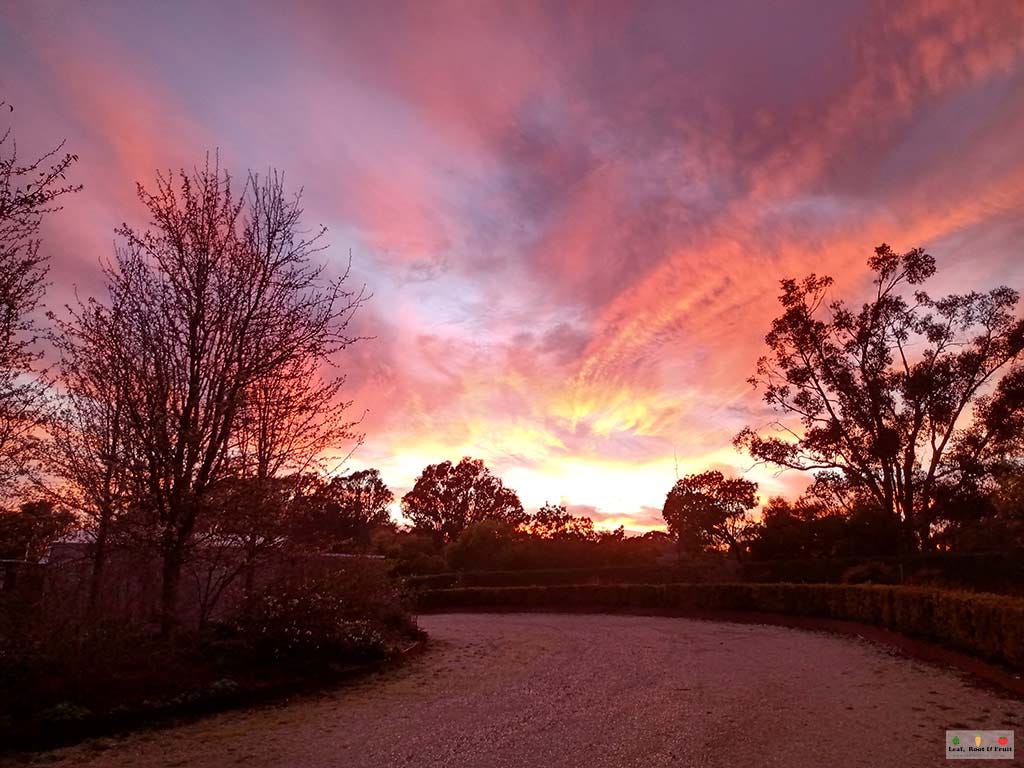
Some of my best writing is done between the hours of 4.30 and 7.00 am. At that time of day there are no distractions and my mind is sharpest. I haven’t set an alarm clock in years – I don’t need to. Much to my partner Caryn’s annoyance (she’s not a morning person), I just can’t sleep in. There’s too much to do. Sleeping in means “burning daylight”. My father was a dairy farmer. It’s possible I get my habit of early starts from him. He’d wake at around the same time that I do, round up the cows and milk them. Dad was a workaholic, just like his dad before him. The men on my dad’s side of the family – a long line of farming folk – don’t retire. They work until they die. I guess that’s what happens when you love your work and have a strong connection to the land.
Today I turn 45. I didn’t notice much change in myself when I first hit my forties. But five years on, there are certain physical things I can no longer do. I don’t bounce as easily. It takes longer to recover from physical activity and illness. There are more aches and pains. I reckon people peak, physically, in their late thirties. You don’t get any stronger or more physically able after that. Early forties is the crest of the hill, and by mid-forties the downward slide has begun. I reckon there’s a fair bit of truth to the saying that we’re “over the hill” at 40.
With age comes wisdom and a greater awareness of your own mortality. Becoming a father was a huge turning point for me. My son Angus was born eight years ago, and almost overnight I became far more risk averse. I had responsibility for someone. I needed to be around to care, nurture and protect this wee human. I started seeing some of my favourite activities in a new light. What if I go scuba diving and something goes wrong? I never used to think like this. I even started driving like an old man. I went from automatically driving 10 km over the speed limit, in a race to get everywhere fast, to happily chugging along 5 km under the limit. I need to stay alive to keep my humans thriving.
As part of this reflection on my own mortality came the realisation that I have only one direct ancestor still living: my mum. Unfortunately, my dad died at the age of 64. It was complicated, a rare disease that may be linked to genetics and exposure to benzene (which is common in diesel – something farmers are regularly exposed to when filling tractors and other machinery).
None of us has any idea when our time will come. None of us has a crystal ball to tell us how many days we have left. My grandparents all lived full and wonderful lives, dying quite late in life. Most of the workaholic farmers in my family lived to a ripe old age, battling through sore backs, worn-out hips and all sorts of ailments associated with tired, old, over-worked bodies. But then Dad’s early death reminds me that life is short, sometimes too short. If I live to the same age as him, I’ll have only 19 more seasons of growing tomatoes, and that horrifies me.
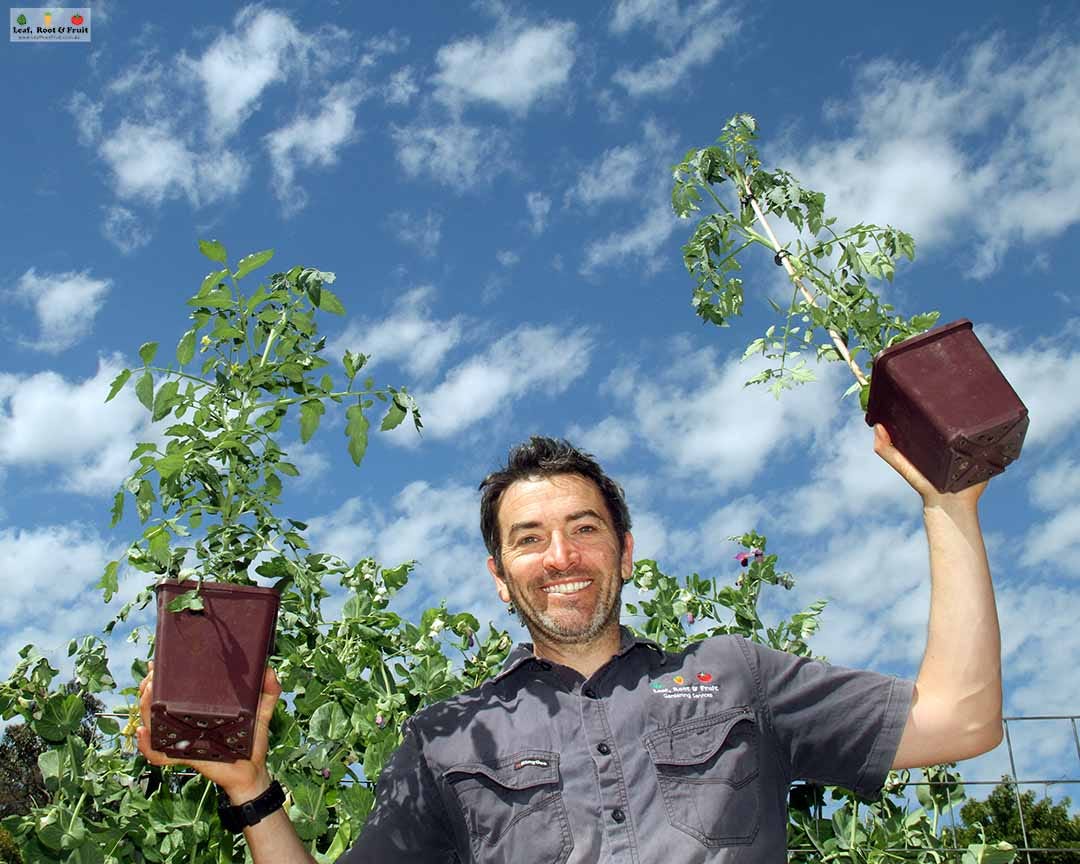
Nineteen years sound like a lot when you think about opportunities for taking trips around the world, going bungee jumping and anything else that might be on your bucket list. But when I think that I may have only 19 more opportunities to plant tomato seeds, 19 more winter solstices, 19 more opportunities to experiment, run trials, record data and refine my planting plan … that’s not a lot.
Not a lot at all.
Of course, I could have many more chances. But I could have far fewer. We don’t know when our time will come.
How many more seasons do I have to teach my kids all that I know about gardening?
How many sunrises and sunsets do I have left?
How many more visits from kingfishers or echidnas to my garden?
The older I become, the less rushing I do. I still see importance in punctuality (five minutes early is on time). But I’m more inclined to take a break from planting to admire the clouds drifting by. Stopping to smell the roses (or in my case Tagetes lemmonii) is a perfectly fine way to spend an afternoon. For me, life is no longer about how many stamps I have in my passport, or how much money the business has turned over this year. It’s about connection. Connection to country and connection to the people around me.
No matter how many more seasons I have left, I’ll keep writing. I want to pass on all that I learn. Yes, I write for myself, but it’s so much better if there’s someone reading it. Thanks for being that someone.
Every season counts. What are you going to do with yours?
How I did so enjoy your blog and I had to laugh at your youthful comments. Last birthday I turned 80. I have been gardening just like you for 55 years. Yesterday I moved a couple large rocks and got in a fair bit of winter veg. I love your work. Even at my age, I love reading and practicing your wisdom. Pam (from poultry).
Always enjoy reading your posts. We can all aim to fill our days with simple pleasures like taking time to smell the roses and noticing changes in our gardens.
I chuckle at your take on ageing at 45. My advice is to make the most of your 60's because the body goes downhill from then!
Best wishes for many more years of growing.