

My Leafy Greens Trial Part One
A systematic planting experiment to determine what leaves to plant when.
I love nature’s clock. Sometimes it baffles me when trees blossom unexpectedly or pest outbreaks occur in seemingly haphazard fashion. But nature’s clock is regulated by a complex interplay of warm and cool periods of weather, daylength, drought stress, irrigation, and potentially even the wing beats of a lone butterfly in Japan.
Sometimes, it runs with more precision than my grandfather’s old Omega watch. Leafy greens such as silverbeet and kale bolt (flower and set seed) in such a predictable way that you might think they had built-in battery-powered alarms. That’s because this event is regulated by daylength (photoperiodism). For decades I’ve observed this phenomenon in my own garden and many of my clients’. I have some questions about it. Mostly, if a seedling is young enough, can it ignore the increasing daylength in spring and not bolt? How small does the seedling need to be? Or to put it another way, how early in the season can I plant my silverbeet and kale and not end up with seedlings that bolt that same spring?
Then there are lettuces. Gosh, they are confusing. Plant them in winter and they stagnate in the cold soil. Plant them in spring and the daylength induces them to bolt. Plant them in summer and the heat has them shooting flower spikes skyward. To ensure a year-round supply of lettuces, or at the very least a summer of garden salads, succession planting needs to be optimised. How often do you need to plant a crop to even out the gluts?
Once I’d started down this rabbit hole of trying to determine how to optimise my plantings of leafy greens, I found that Google could answer only so many of my questions. Daylength fluctuations vary with latitude. It’s why you can grow coriander as a short-lived perennial on the equator – the daylength there never changes. But plant a coriander seedling in your southern-hemisphere temperate climate garden in September and watch it quickly flower and amount to nothing. If I want to know the answers specific to my garden and my latitude, then I need to roll up my shirt sleeves and work them out for myself. Fortunately, if you live in a climate similar to mine, and at a similar latitude, then my work will help you too.
So many seeds, so much space, and oh so much data
Collecting data for my leafy greens trial has so far has taken me over 16 months, and I expect I won’t have the complete data set for another year. It also takes up an incredible amount of space. I’ve dedicated 16 x 3.5 metres of garden space to this trial, which has meant less space for growing tomatoes and sweetcorn. But on the plus side, for over twelve months, my family has had an abundance of lettuce, celery, kale and silverbeet.
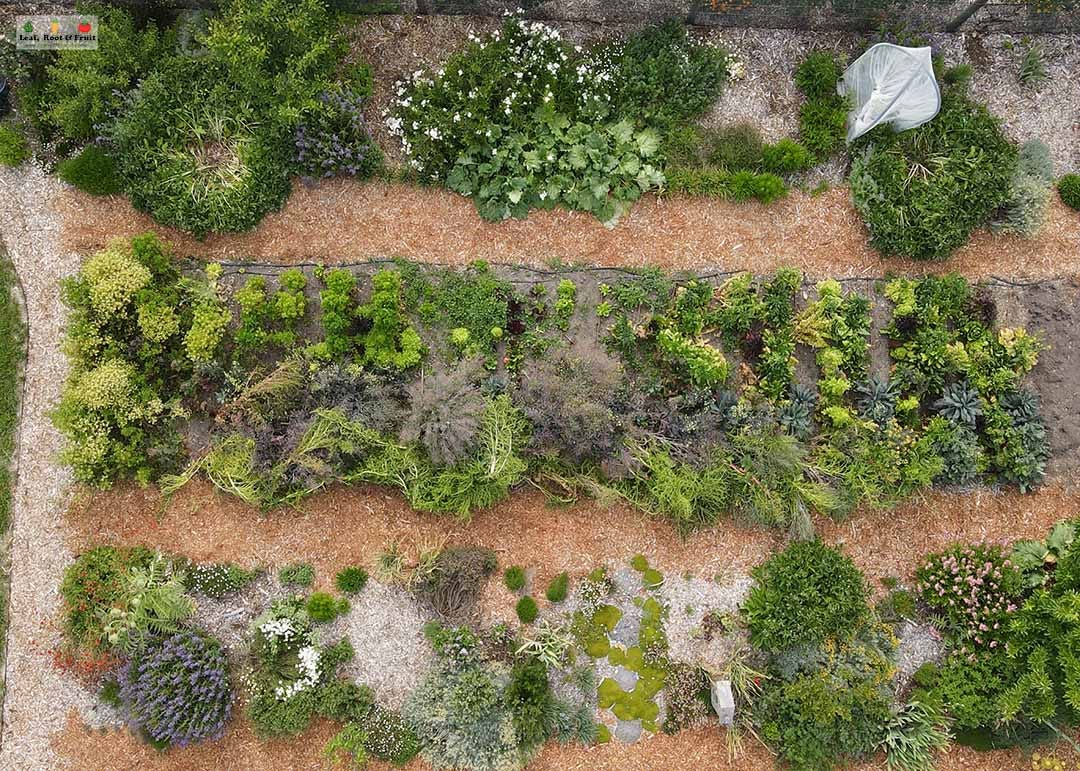
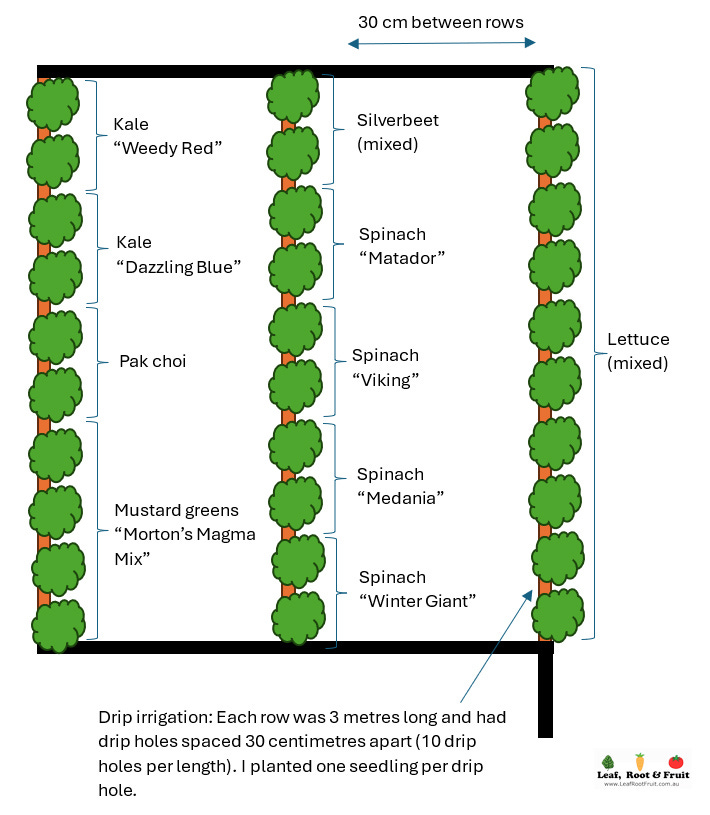
Despite the vast amounts of data I’ve collected and space I’ve used up, the trial is dead simple to explain. For 12 months, on or around the first Wednesday of every month, I sowed a range of leafy greens into Hiko cells and placed them in my greenhouse to geminate. I used the same layout of Hiko cells each month and planted seed from the same packets each month. I recorded data on when the seeds germinated and when I transplanted the seedlings into the garden. I used a planting grid consisting of three lengths of drip line, each with 10 drip holes. This is the planting pattern I used
The celery was the exception. Everything about celery is slow. It’s slow to germinate. It’s slow to grow big enough to transplant. It’s slow to establish and be ready to harvest. But if you get the timing right, it’s also very slow to finish producing. A well-timed celery crop can be a very productive thing indeed. Because I knew the turnaround was going to be so long for this crop, I grouped all the celery plants together at the south end of the garden bed. Fifteen months later, the results for fast growing crops like mustard greens and lettuces are done and dusted, but I won’t have a complete data set for the celery for another year.
I recorded the dates I transplanted each crop. I recorded the dates when I first began to harvest them. I recorded observations such as infestation of cabbage whites on the kale, powdery mildew on the silverbeet and lettuces beginning to bolt. Once the plants were spent, I recorded the date I could no longer harvest from them. I recorded pages and pages of data
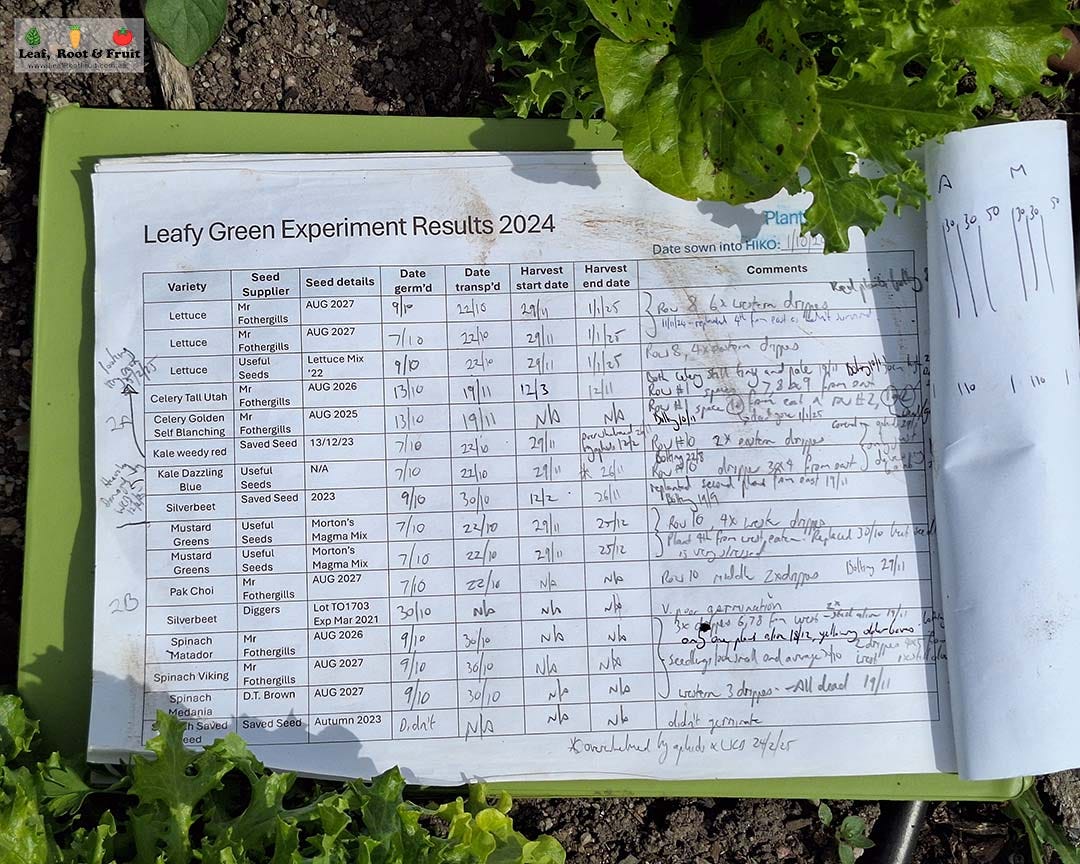
I’ve since taken that leafy green data and with the help of a trusty spreadsheet, I’ve crunched it. I’ve made some pretty pictures and enjoyed some fascinating discoveries. I’d always lumped all the leafy greens into one big basket and assumed that the advice for growing, say, spinach was just as applicable to silverbeet, lettuce and kale. But alas, that’s not the case. They all have their own little quirks and requirements. Planting pak choi on the same schedule as kale is a recipe for disaster. Want a summer filled with just the right amount of homegrown lettuce? You’ll need a more nuanced strategy than simply planting a crop every six to eight weeks.
Yes, I’m an obsessive plant nerd. But you don’t need to be. Read on to find out what I discovered about how to ensure a steady supply of leafy greens year-round.
The expected: Silverbeet and kale
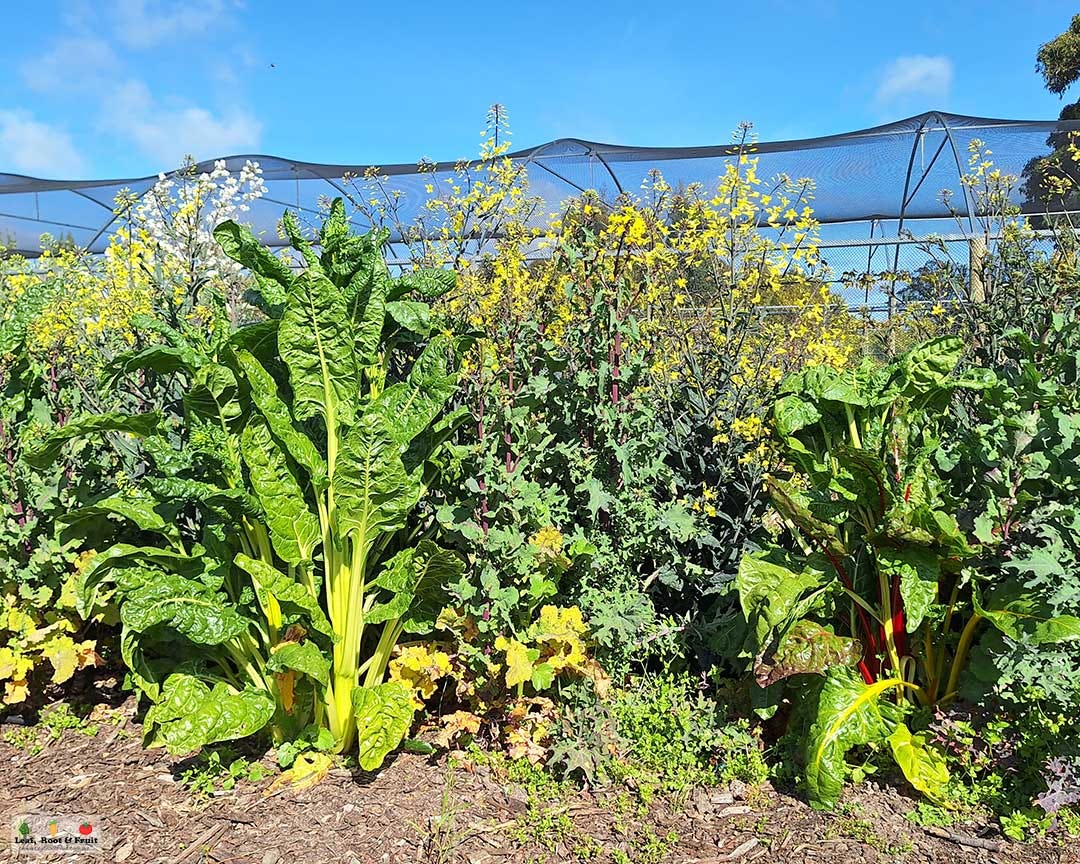
Some of my results were exactly as I expected. Stalwarts such as kale and silverbeet are a case in point. If you plant them at the right time of year, they keep cropping all year until photoperiodism causes them to bolt. There’s no need for succession planting of kale or silverbeet. Just plant them in early spring and reap the rewards for the rest of the year
As you can see from the table “Harvest Period for Kale”, below, the best time to plant kale is the first week of September, because this will give you the longest harvest time (a whole year of fibrous green goodness). The worst time to plant is June to early August, because you’ll get only a month of kale before the plants set seed and stop producing leaves.
The same principles apply to silverbeet.
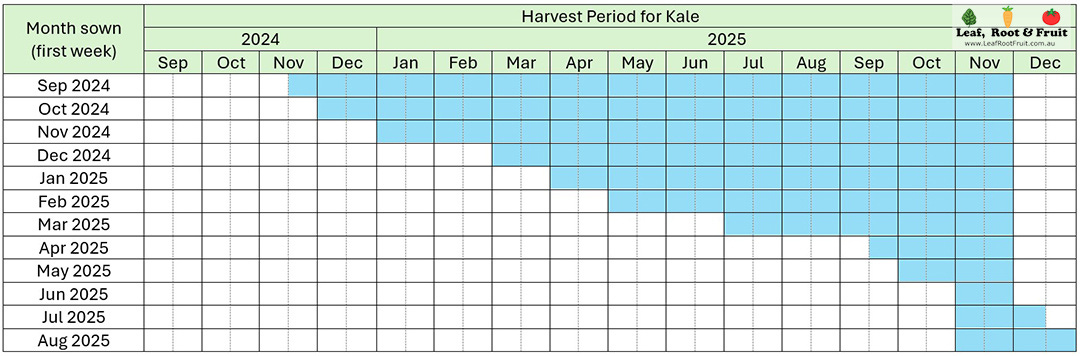
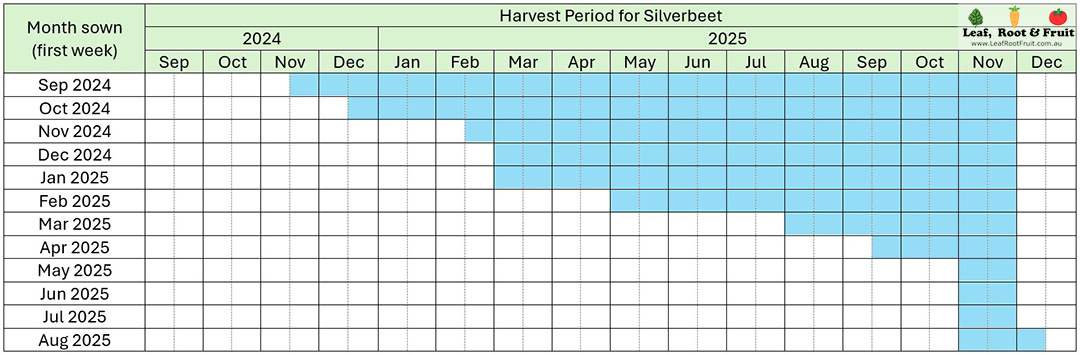
In my trials, the only kale seedlings that didn’t bolt in September were the plants sown in the following months:
Kale “Weedy Red”: July and August
Kale “Dazzling Blue”: June, July and August
But those exceptions (bar the August sown “Dazzling Blue” kale) bolted anyway, only a month or so later than the others, and without really producing any crop of significance.
Some varieties of kale can be planted in August, but others, like my “Weedy Red”, will bolt if planted too early in the month. I’ll update kale on my planting plan, so you avoid making this mistake if you have kale that’s prone to early bolting.
Don’t bother planting silverbeet from April to August or it will soon bolt.
You can plant kale or silverbeet as late as March and still harvest from the plants. However, the maximum harvest window for both kale and silverbeet, as noted earlier, is obtained by planting seeds in the greenhouse in September and transplanting seedlings around two weeks later. Theoretically this would also work with directly sowing the seeds – the soil should be warm enough – but I haven’t yet confirmed this.
Read part two with the results of my trials of five more leafy greens (including one utter failure) here. My results for lettuces were fascinating and I dedicated a whole post to the result results. Read it here.
From my family to yours, have a great, greens-filled festive season.
Duncan
This will be so fabulously helpful, well worth all you effort. Thank you! I'm a lazy gardener, and I love the flowers when my greens bolt, as do the bees, so I tend to leave a few, (and sometimes lots) simply for visual enjoyment. I've also found that doing so means I have an ongoing supply of silverbeet, mustard greens and bok choy seedlings popping up whenever and wherever they decide is right, which generally works quite well to keep me supplied, although lettuce invariably reverts to a pretty, but very bitter and weedy plant, only edible when tiny. It's haphazard gardening I know, but kinda works .... Kale I have had little success with, but perhaps I've been planting at the wrong times by your schedule, so I look forward to trying again. We're in the Barringo Valley outside New Gisborne, on a stony sunny north facing hillside, which I find has a very different climate to the rest of the Gisborne/Macedon areas. It's so individual to one's own bit of land isn't it.
This is amazing. Truly the kind of data that makes me glad I subscribe. Looking forward to the lettuce data and putting it into practice when I’m home from holiday.
Do you have any guesses for how I might be able to extrapolate your data for a protected Melbourne garden? I’ll need to start my own experimenting of course