

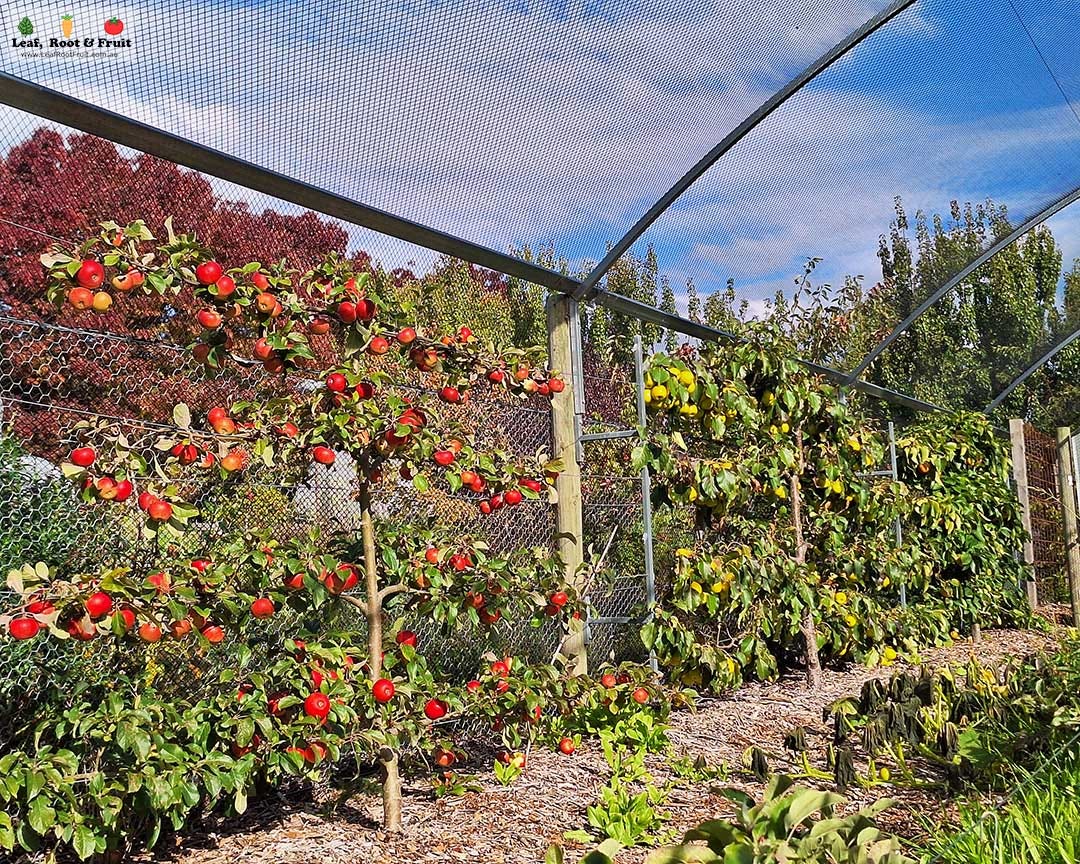
I love the year-round interest provided by my espaliered fruit trees – blossom in spring, colourful fruit in summer, dramatic foliage in autumn and bare sculptural branches in winter. Espaliers make efficient use of narrow spaces and can be incredibly productive. I planted most of my espaliered fruit trees as spindly, bare-rooted twigs in winter 2021. By early 2024 they had filled out their trellises. In autumn 2026, some of those trees produced between 50 and 70 kilos of fruit – each!
During my garden consultations I’m increasingly seeing DIY espaliers. They’re becoming very popular, and rightly so. But in some cases I’m seeing signs of too much enthusiasm (jeepers, “too much enthusiasm” – did I really write that?). These over-enthusiastic approaches could end in disaster:
squeezing in too many trees
planting espaliers on rootstocks that are too vigorous
relying on trellis systems that are under-engineered.
I’ve already written an introductory post on setting up espaliers, and I’m not planning to cover the same ground here. Want to know which types of trees suit which shape, and how to prune and train them? Then head over to this post for all that info.
Etymology: It’s all about the structure
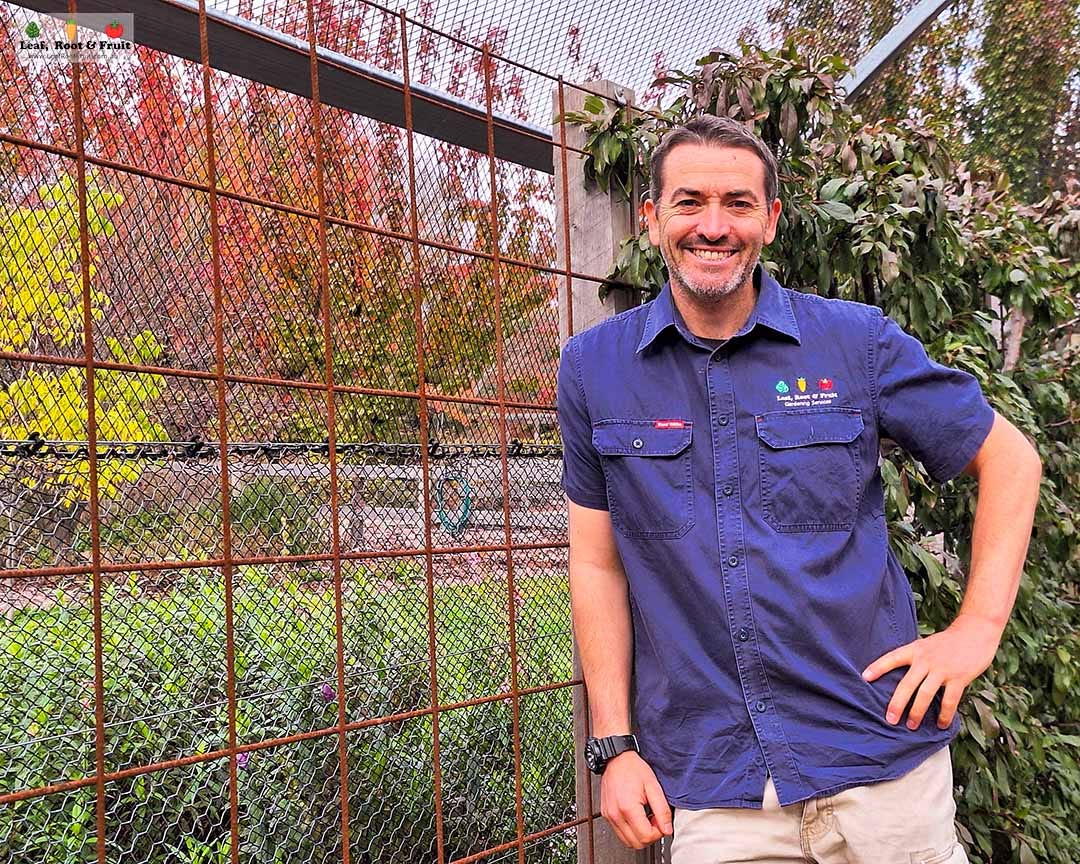
“Espalier” is a French term, but the word derives from the Italian “spalliera”, which means “something to rest the shoulder (spalla) against”. When the French adopted the term “espalier” it initially referred to the trellis system that the tree is trained against, rather than the tree itself. And I think that’s for good reason. The most important part of setting up an espalier is the trellis system. It supports a tree that could thrive for centuries. It needs to be:
over-engineered and robust so that it’s supportive
able to be replaced at the end of its material lifespan without damage to the tree
of adequate dimensions for the proposed tree
attractive in its own right, so it enhances the beauty of the tree and doesn’t detract from it (if this is important to you).
But in my consults lately, I’ve been observing trellis structures that tick only one or two of these boxes. Some of them are not ticking any.
To combat some of the espalier misinformation out there and help you to better set up your own espalier trellises, I’ve put together this post on how to build them, what dimensions to use, and which rootstocks are best for espaliers.