

Thanks to everyone who has requested free seeds as part of Seeds of Gratitude 2.0. I’ll post them out in early May. There are still plenty of packs left – claim yours here.
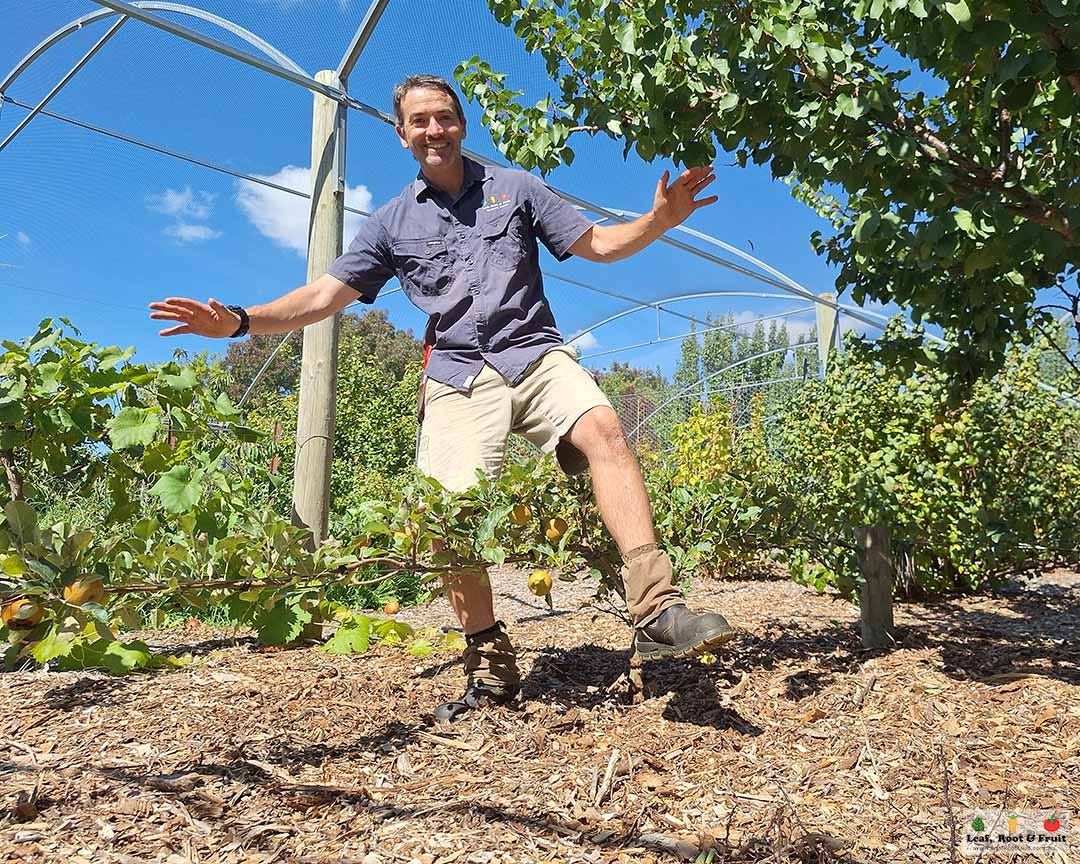
During workshops and events in my orchard, participants are always keen to get a closer look at what I’m doing. To stop people from trampling the garden beds in their enthusiasm to get close to the action, I decided to construct some low fences, consisting of posts and cabling. These gave me the opportunity to plant some stepover apples and train them along the cabling. Trained in this way, they make one of the simplest forms of espalier.
Stepover apples are great for defining garden edges. They can be productive pieces of art without dominating a space like full-sized espaliers can.
My backyard orchard is too big and I really didn’t need any extra fruit trees (more on that here). But back in 2023, I still hadn’t worked that out. I was in my “bigger is better” phase of gardening. The new fences gave me an opportunity to include a bonus 24 varieties of apples in my orchard, so I did. Fast forward to 2026 and I really don’t need those extra apples, but I don’t regret the decision, because they have developed into a stunning garden feature.
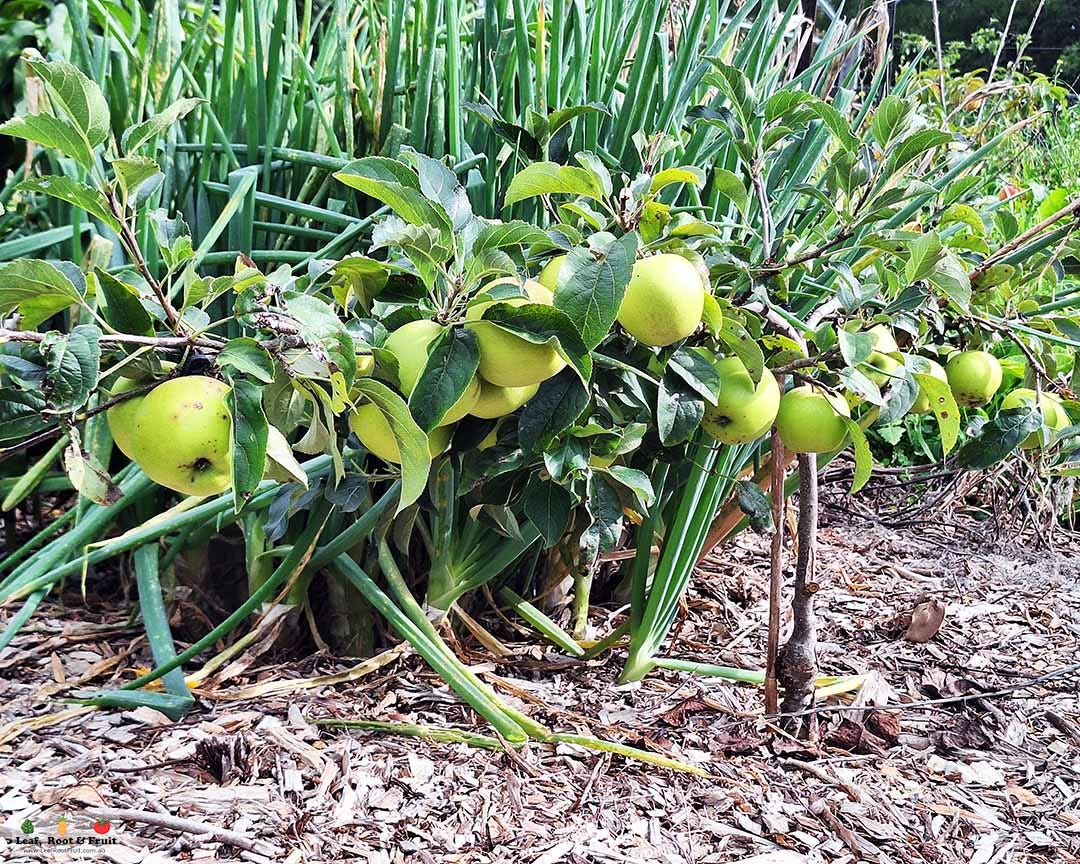
How do you create an apple stepover?
Do try this at home. But don’t bother nipping down to your local nursery and grabbing any old apple tree to create a stepover. It’s almost sure to be on the wrong rootstock for this job. In time it’s likely to create a giant mess, endless pruning sessions, and an abundance of leaves but few fruit.