

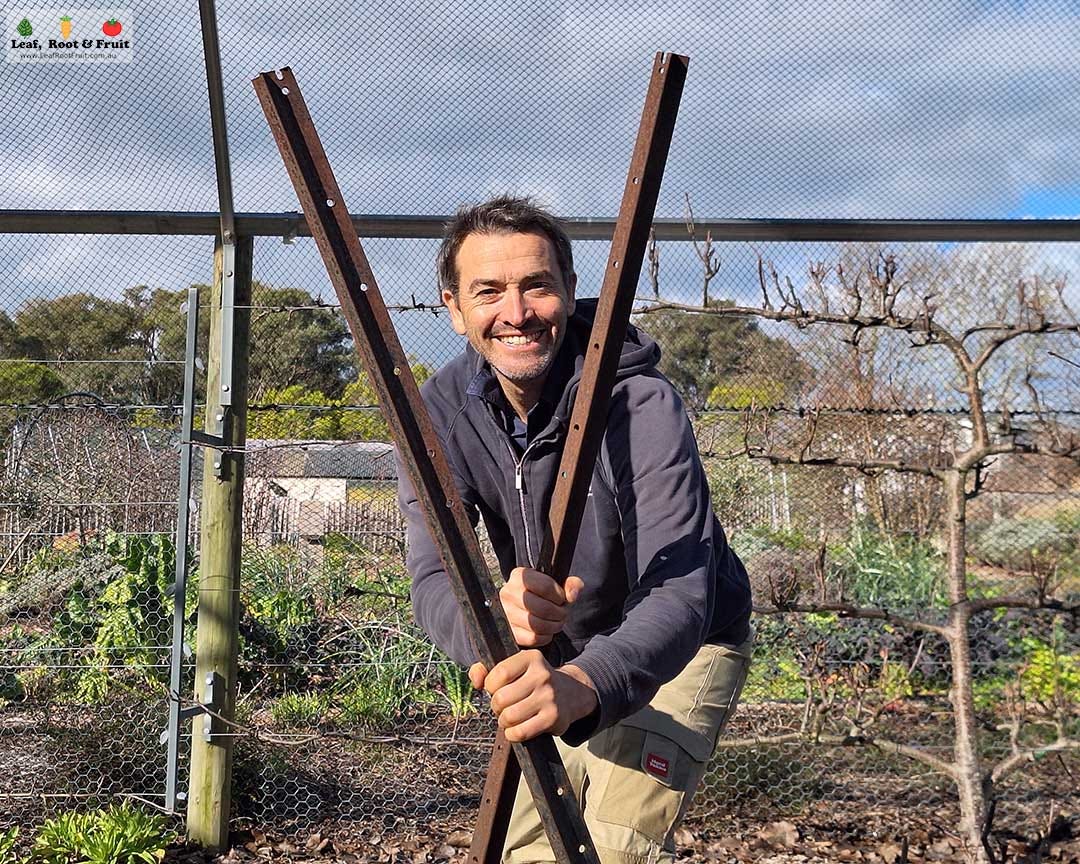
It’s bare-rooted season, and many trees are finding new homes in backyard orchards. Recently, I wrote about digging holes and planting trees, offering a perspective unfamiliar to many readers. Today’s post looks at the pros and cons of staking fruit trees and describes a method I’ve developed to provide your fruit trees with the best of both worlds: a sturdy support and the freedom to move.
Why wouldn’t you stake your freshly planted fruit tree?
Bare-rooted fruit trees are missing around two-thirds of their root system. Their canopy, when it leafs out, is likely to be much larger than the root mass. The poor things are top-heavy and tend to wobble like a toddler finding their feet for the first time. Staking a tree is like helicopter parenting. We need to stand back and let the tree find its own balance. Staking a tree reduces its flex and movement on windy days, but the tree needs to “feel” that motion to stimulate the development of a stronger root system. If the tree doesn’t move, it will focus on other aspects of growth, such as foliage and fruit. This sounds great, until you realise that the tree will become forever reliant on the staking. As the fruit develops, its weight will start snapping branches, or the tree will topple in the next big wind.
Trees are resilient, and a bit of tough love will usually help them grow strong and resilient. I’m all for “chucking them in the deep end”.
But sometimes they do need a helping hand
Generally, I avoid staking fruit trees, but there are two situations when I’d consider it: